How we choose our staff picks
No algorithm, no paid placement: just three booksellers arguing in the back room. Here's how a book earns a handwritten shelf tag.

Every staff pick starts with one of us loving a book enough to argue for it.
The back-room argument
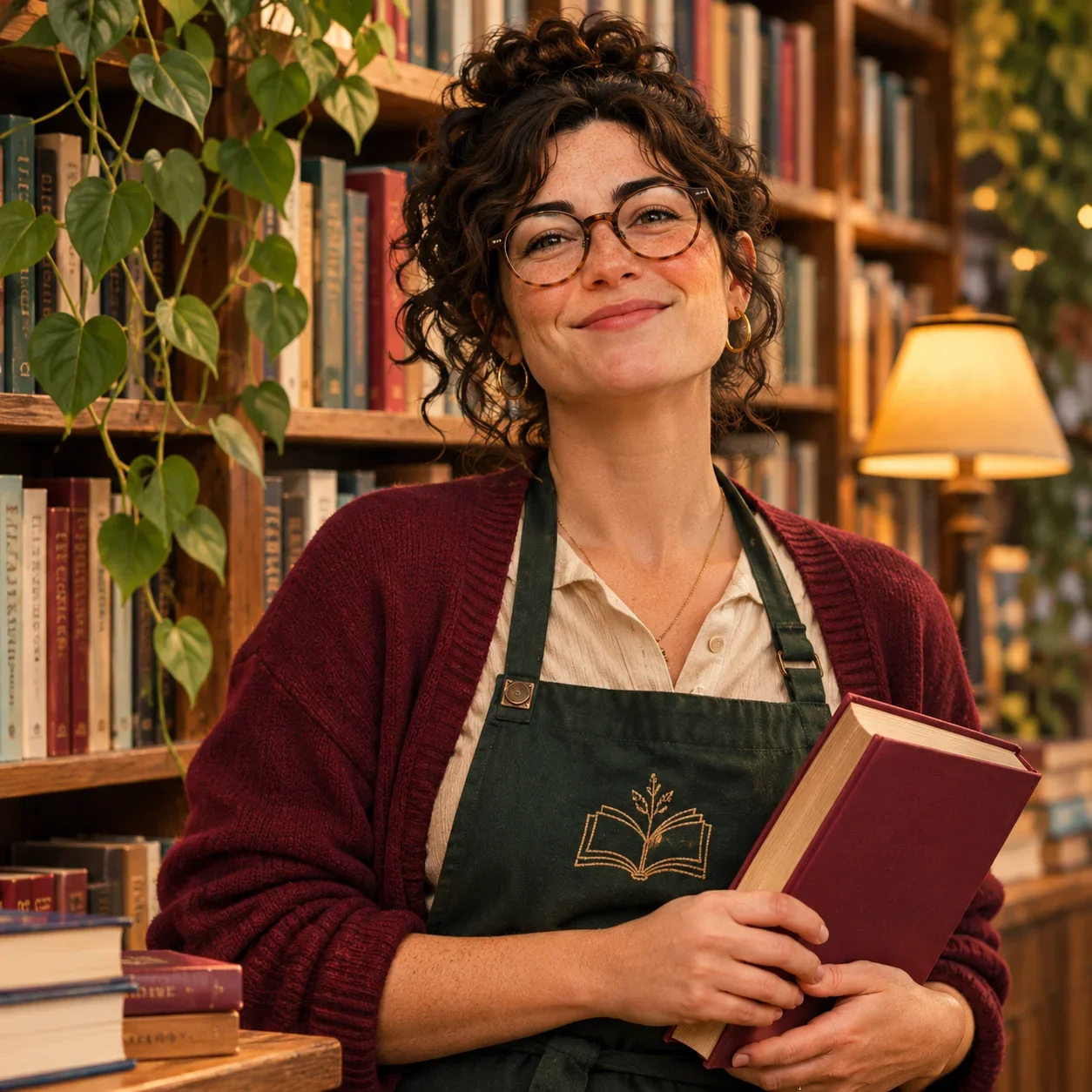
There are three booksellers at Loamed & Found, and we almost never agree. Paige reads everything and recommends most of it. Dewey buys the used and rare books and suspects anything printed this decade. Libby reads picture books aloud for a living and can tell within two pages whether a story works out loud.
So a book doesn't become a staff pick because one of us liked it. It becomes a staff pick because one of us liked it enough to defend it in the back room, over cold coffee, against two people who are perfectly happy to say no.
What a book has to survive
The rules are short, and we made them up, like everything else here:
- One bookseller has to have finished it, not just started it with great intentions
- The other two have to read at least the first fifty pages
- Someone has to be able to say who it's for in one sentence
- Nobody can be paid to pick it, ever
That last rule matters most. There is no paid placement on our shelves or on our website. If a book has a handwritten tag, it's because someone here would hand it to a friend.
From shelf tag to web page
It has to survive the other two, get a handwritten shelf tag and, here on the website, its own page with a price and a reserve button. The tag says why we love it. The page says the same thing, plus whether it's in stock and how to hold a copy at the counter.
That page is a product record, which means search engines see the title, price and description the way a shopper does. When someone nearby searches for a book we've picked, the result can show the price and availability before they even click. A handwritten tag can't do that, no matter how nice the handwriting.
Why it's worth the trouble
Recommendations are the one thing a small bookstore does better than a warehouse. A website that keeps those recommendations, with the reasoning attached, lets a shop be helpful at 11 p.m., when the doors are locked and someone is wondering what to read next.
If you truly can't decide, the Blind Date with a Book is $20, wrapped in brown paper with three hints written on the front. We picked it, so you don't have to.
Useful, for a store that doesn't exist. The booksellers are invented and the arguments are imaginary, but the way a pick travels from the back room to the website is real.
Post Details
Paige opened Loamed & Found to prove that a small shop can know your taste better than any algorithm. She is right about this, in theory.
September 25, 2026
Browse Categories